



Sitting Statues of Sakyamuni Buddha with Copper and Gold
This is a bronze gilt statue of Sakyamuni Buddha, with a typical Tibetan Buddhist art style. According to its gesture (seal), this Buddha statue can be identified as the master Sakyamuni Buddha. Statues are usually cast in copper or bronze and gilded on the surface. This movable gold and bronze Buddha statues were very popular in the Han and Tibetan areas of China and lasted until the Ming and Qing dynasties. The statue has a plump face, a serene look, regular screw hair, a right shoulder cassock, smooth clothing lines, and a double-layer lotus throne with a waist. This style combines the characteristics of statues in India, Nepal and the Central Plains, forming a unique Tibetan Buddhist art school.
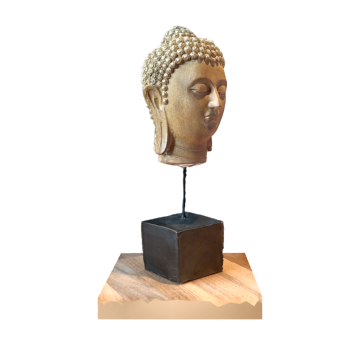
Buddha head ornaments
This is a Buddha's head ornament, commonly used in home decoration, designed to create a peaceful, Zen atmosphere. The sculpture depicts the head of Shakyamuni Buddha. It is characterized by slightly drooping eyes, a calm expression, elongated earlobes (symbolizing the abandonment of worldly wealth) and a spiral bun on the top of the head. It is installed on a simple black base with a natural wood grain square bottom under the base. The overall design combines classical Buddhist elements and modern minimalist style.

Buddha Head Statue of Sakyamuni, Founder of Buddhism
The statue depicts the head of Buddha Sakyamuni, the founder of Buddhism, with a meditative look, closed eyes, a bun on the top of the head (called "Ushnisha", symbolizing wisdom) and a spiral bun (called "snail hair").

Stone carving of Buddha's head (Thai dra mantle period)
This is an ancient stone Buddha head with a unique artistic style, and is usually identified as a work originating from the Dhara Mantdi (Mon-Dvaravati) period in Thailand, about the 7th to 8th centuries AD. It combines Indian archetypes and local aesthetics, and is an important representative of early Thai Buddhist art. The Buddha's head shows a serene, introspective look. The piece is carved from sand or limestone. As an ancient relic, it bears obvious traces of years and beautiful patina (patina), reflecting its long history.

Wood Carving of Buddha Head
This is a statue of the Buddha's head, depicting the head of Buddha Sakyamuni, the founder of Buddhism, with a meditative look, closed eyes, a bun on the top of the head (called "Ushnisha", symbolizing wisdom) and a spiral bun (called "snail hair"). The statue presents a wood-like carved texture and brown tone distressed effect, with a strong Zen or Southeast Asian Balinese style, designed to create a peaceful and peaceful atmosphere.
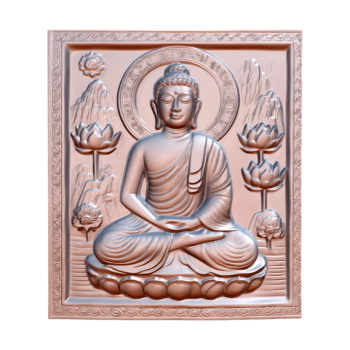
Metal relief Sakyamuni lotus statue
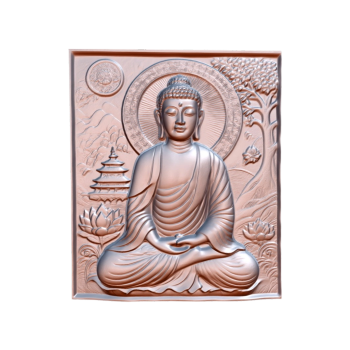
Sitting Statues of Sakyamuni in Metal Relief

Buddha
The image of Buddha. Generalized including Bodhisattva, Rohan, Ming Wang, and so on. Although there are two kinds of statues, sculptures and portraits (pictorial), only sculptures are called Buddha statues, while portraits are called images. In ancient India, it was believed that carving Buddha statues was a blasphemy, so ancient carvings such as Shanqi (Sanskrit ^ nchi ^) only symbolized Buddha with the marks of Buddhism, Bodhi tree, Buddha's footprints, etc. Later, with the rise of Mahayana Buddhism, the sculpture of Buddha began to prevail, so there are many records about the cause of the statue and its merits in the Mahayana classics.

Sleeping Buddha (3D printing)

Reclining Buddha Sakyamuni (wood carving)

Buddha statue
This statue depicts the Buddha's appearance before his enlightenment under the Bodhi tree. What happened before this moment is often described as a fierce struggle between good and evil, delusion and insight. Moro, the god of illusions, attacks Buddha and challenges the young prince's right to eliminate him. In response, the Buddha extended his right hand and called on the earth to witness his lifelong good deeds. In records from Southeast Asia, the goddess of the earth appeared and submerged the earth, destroying Moro and his army.

Shakyamuni Buddha statue (8th century AD)
The limestone Buddha head of Shakyamuni, dating back to the 8th century AD, is currently housed in the Minneapolis Academy of Arts. The Buddha statue of Shakyamuni is highly compatible with the classical style developed by early sculptors of the Tuora bowl. The face is square, the mouth is wide, the nose is flat, and the hair is curly. Although the artist of the Tara bowl drew inspiration from the idealized sculpture concepts of India, this portrait indicates that the facial features of the local residents quickly integrated into their religious art.

Buddha sculpture
The highest fruit of Buddhist practice. Buddha is a transliteration of Sanskrit, abbreviated as Buddha, also translated as Futu or Futu, originally meaning enlightenment. Perception has three meanings: one is self-awareness, which is the so-called self realization of one's nature; The second is called Jue He, which means to speak and guide people; The three are called perfect perception and action. Those who possess these three points of enlightenment can be called Buddha. It is said that Shakyamuni attained enlightenment at the age of 35, gaining insight into the true essence of the universe and life, achieving liberation, and began to proclaim the true meaning of his enlightenment to the public, earning him the title of "Buddha". So, Buddha or Buddha often became synonymous with Shakyamuni, but not only Shakyamuni is named after Buddha.

Shale statue of Shakyamuni half body from Peshawar, Pakistan in the third century
The half body statue of Buddha, made of shale in the 2nd and 3rd centuries, originated from Peshawar and is currently housed in the National Museum of Pakistan. Shakyamuni was like turning a wheel with both hands, wearing a huge bun on his head. He has regular facial features, a high nose, deep eyes, and a small beard on his lips. Wearing a robe with exposed right shoulder, the folds are very smooth. Strong in physique, it is the pinnacle of the Jiandala statue.

Marble Steles of Sakyamuni and Maitreya in the Northern Qi Period
The stele is a marble carving from the Northern Qi period. The Northern Qi Dynasty (550-577) was one of the Northern Dynasties in the Southern and Northern Dynasties in Chinese history. During the Northern Qi period, Buddhism spread and developed widely in China. Buddhist art works in this period often show a unique artistic style. The Sakyamuni on this stone tablet represents the past and future of Buddhism respectively. The Buddha Sakyamuni shows a kind smile with fearless and alms gestures, flanked by two Bodhisattvas and two disciples. Sakyamuni, also known as Gautama Siddhartha, was the founder of Buddhism and founded Buddhism in ancient India in the 6th century BC.

Popular Models
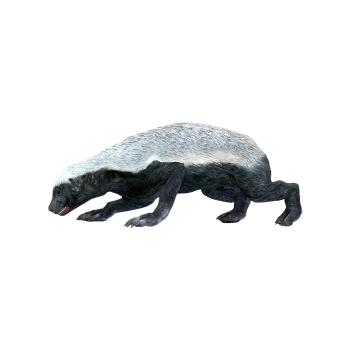
Honey Badger (3D animated model)
192 View
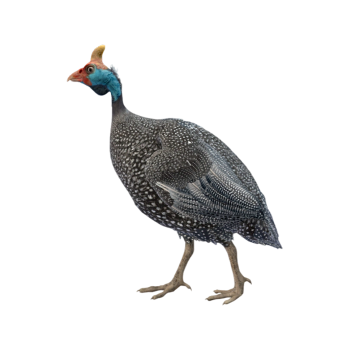
Guinea fowl (3D animated model)
163 View
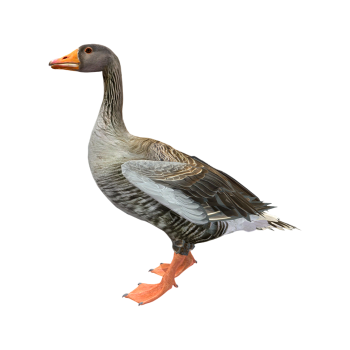
Wild Goose (3D animated model)
185 View

Red Fox (3D animated model)
153 View
Random Model
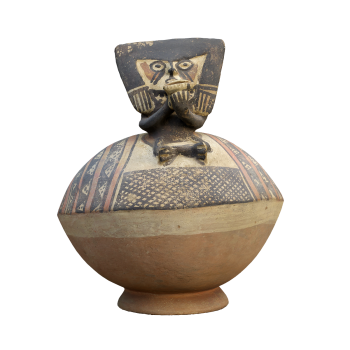
Metal trash can
467 View

Copper Boar Sculpture
459 View

AJ(Air Jordan)Delta SP Black sneaker
709 View

Green backed Mullet
793 View

MK 235 cassette recorder
913 View


Retro desk fan
520 View


Pumpkin
500 View